
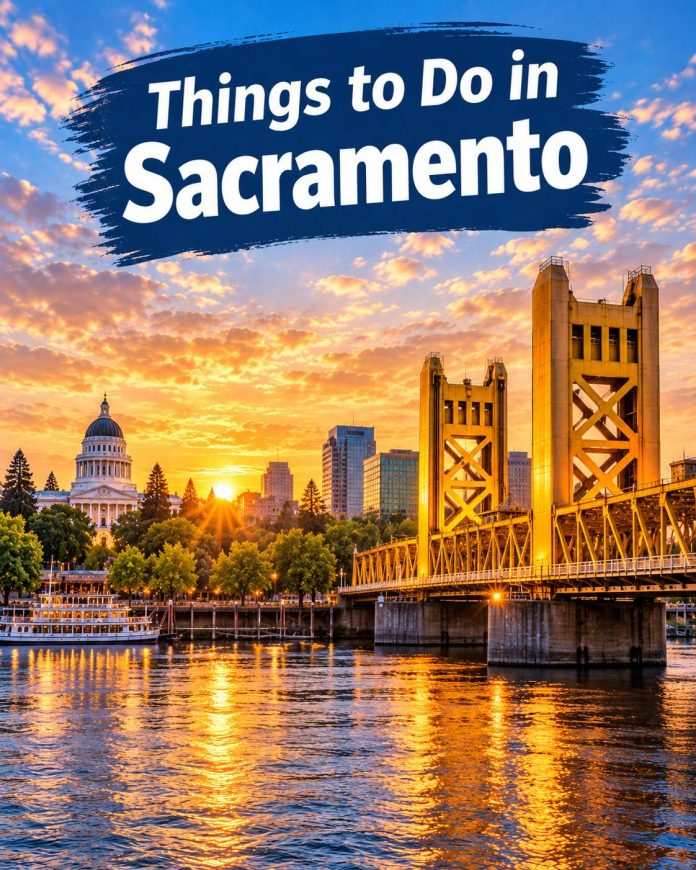


Sacramento rewards visitors who mix California history with riverfront walks, serious museums, neighborhood food stops, and easy outdoor time. The things to do in Sacramento that matter most cluster around the State Capitol, Old Sacramento Waterfront, Midtown, Land Park, and the American River, so you can see a lot without wasting half your trip in the car.


What are the best things to do in Sacramento?
- Start with the California State Capitol, Capitol Park, and The California Museum for the strongest introduction to the city.
- Give Old Sacramento Waterfront several hours rather than treating it as a quick photo stop; its railroad and city-history museums carry much of the district.
- Crocker Art Museum is the indoor stop I’d protect if the weather turns hot or rainy.
- Families should build a separate Land Park block around the zoo, Fairytale Town, Funderland, and the WPA Rock Garden.
- For a lower-cost day, combine Capitol Park, Tower Bridge, the riverfront, McKinley Park, Sutter’s Landing, and the American River Parkway.
| Area | Best for | My time priority | Best way to move |
|---|---|---|---|
| Capitol and downtown | Government, architecture, first visits | Half day | Walk |
| Old Sacramento Waterfront | Railroad history, riverfront, families | Half day | Walk |
| Midtown and East Sacramento | Local neighborhoods, parks, history | Half day | Walk, bike, short rides |
| Riverfront and American River | Museums, cycling, open space | Half day | Bike or car |
| Land Park | Families and slower afternoons | Half day | Car plus walking |
| Greater Sacramento | Aviation, nature, campus stops | Half to full day | Car |
Where are these Sacramento attractions on the map?
Most major Sacramento sights sit in a fairly compact central corridor, with the Capitol, Old Sacramento Waterfront, Crocker Art Museum, and Midtown forming the easiest sightseeing core. Land Park, the American River, McClellan, Carmichael, and Sacramento State are better treated as separate clusters instead of forcing them into one long walking day.
What should you see around the State Capitol and downtown Sacramento?
First-time visitors should begin here because downtown puts government, civic architecture, museums, public spaces, dining, and entertainment within a manageable area. The Capitol remains both a museum and the working seat of California government, while Capitol Park stays accessible even when building schedules change.
1. California State Capitol Museum
Start here before the rest of downtown. The building gives Sacramento a sense of purpose that other California cities don’t have: this isn’t a ceremonial monument preserved behind ropes, but part of a working government complex. The public experience mixes restored interiors, political history, architecture, and the present-day machinery of state government.
Admission to the Capitol Museum is free, and current visitor information says public access is focused on weekdays. Tours and access can be affected by state business or construction, so checking the official schedule before setting out saves frustration.
2. Capitol Park
Don’t leave as soon as you’ve seen the dome. Capitol Park changes the feel of the visit from institutional to relaxed, with mature landscaping, monuments, memorials, and shaded paths surrounding the government buildings.
This is one of the strongest free things to do in Sacramento, particularly if you’re already downtown. I prefer giving the grounds their own walk rather than treating them as the path back to the car.
3. The California Museum
The California Museum works well after the Capitol because the subject broadens from government to the people, movements, communities, and ideas that shaped the state. It gives useful context to names and events that otherwise appear briefly in monuments or historic buildings.
For travelers wondering what to do in Sacramento on a hot afternoon, this is an easy indoor answer without leaving the downtown cluster.
4. Leland Stanford Mansion State Historic Park
The Stanford Mansion supplies a different scale of political history. Instead of grand chambers and public lawns, you get a Victorian residence tied closely to California’s nineteenth-century leadership.
The mansion has undergone major restoration and also serves as the state’s official reception center. That continuing public role is part of why I find it more interesting than a house that has been frozen into a single date.
5. Cathedral of the Blessed Sacrament
The Cathedral of the Blessed Sacrament is a useful downtown pause even if church architecture isn’t normally your priority. Its scale surprises people because it sits within the street grid rather than on an isolated monumental site.
Step inside respectfully if public access is available, then continue on foot. It fits naturally between the Capitol area and the northern side of downtown.
6. Cesar Chavez Plaza
Cesar Chavez Plaza works best as part of downtown rather than as a destination that needs an hour of its own. Use it as a reset between museums, architecture, coffee, and the busier blocks around the central city.
Event days can change the atmosphere completely, so this is one place where checking Sacramento’s current calendar can matter more than reading a long attraction description.
7. Golden 1 Center
Golden 1 Center is most compelling when something is happening. If you’ve got a game, concert, or major event on your dates, build your evening around it and stay downtown afterward.
Without an event, I wouldn’t carve a big hole in a short itinerary merely to look at the arena exterior. Sacramento offers too many historical interiors and riverfront spaces for that.
8. Downtown Commons
Downtown Commons, commonly called DOCO, is useful for meals, event-night energy, and an easy break between scheduled attractions. It isn’t where I’d send a history-focused traveler first.
And this is one of Sacramento’s more over-recommended stops when no event is happening. The complex is polished, but shopping and dining alone don’t tell you much about the city. Use it for convenience, not as the centerpiece of a sightseeing day.
Which Old Sacramento attractions deserve the most time?
Old Sacramento Waterfront makes far more sense when treated as a cluster. The historic district combines museums, preserved commercial buildings, riverfront spaces, excursion experiences, and entertainment along the Sacramento River, with more than 125 businesses and attractions in the wider waterfront district.
A mistake I wouldn’t make is arriving, photographing one wooden sidewalk, buying candy, and leaving. That’s the version of Old Sacramento that feels touristy. The museums and preserved state historic park buildings are where the district earns its place in a serious itinerary.
9. California State Railroad Museum
If you only have time for one Old Sacramento museum, make it this one. Large locomotives and railway cars give the exhibits physical scale, while the interpretation connects railroads with migration, labor, commerce, engineering, and California’s development.
The strongest detail is that you don’t need to be a train enthusiast. The museum works because a passenger car or locomotive gives you something tangible before the history becomes abstract. California State Parks describes the collection as one of the finest historic railroad collections in the world, and the museum remains a cornerstone of the district.
10. Sacramento History Museum
The Sacramento History Museum narrows the lens from statewide stories to the city itself. That’s useful after seeing the Capitol or railroad museum because Sacramento stops feeling like a backdrop for California history and starts becoming the subject.
If you’re looking for things to do in Sacramento with kids, the more visual and story-driven parts of Old Sacramento are easier to mix with outdoor breaks than a museum-only day.
11. Old Sacramento State Historic Park
Don’t confuse the larger commercial waterfront district with the state historic park. The park preserves a group of important early commercial structures, including buildings tied to the Gold Rush, California courts, the Pony Express, theater, and railroad history.
Walk slowly here. The useful details are often on or inside individual buildings, not in one panoramic view.
12. Sacramento History Museum Underground Tours
The underground tours explain one of the city’s stranger urban stories: Sacramento’s relationship with flooding and the physical changes made to parts of the historic city. They add context that you won’t get by walking the sidewalks above.
These tours remain a promoted Old Sacramento experience, so check the current schedule and ticket availability rather than assuming you can join immediately after arriving.
13. Sacramento Southern Railroad
An excursion train changes the pace after several indoor exhibits, particularly for families. The Sacramento Southern Railroad is associated with the California State Railroad Museum and operates excursion experiences seasonally, so confirm current service before building it into a fixed timetable.
I like pairing it with the railroad museum rather than visiting on separate days.
14. Huntington & Hopkins Hardware
This reconstructed nineteenth-century hardware store is easy to walk past because it doesn’t have the visual drama of a locomotive hall. That’s exactly why I like it.
California State Parks identifies Huntington & Hopkins Hardware as part of the Big Four Building in Old Sacramento. Smaller interiors like this help explain ordinary commercial life rather than only major historical events.
15. Eagle Theatre
Eagle Theatre is another small piece of Old Sacramento that works because of context. The 1849 theater forms part of the historic park’s collection of early commercial structures.
Don’t expect the scale of a modern theater attraction. Think of it as a short architectural and historical stop within the district.
16. Delta King
The Delta King gives the waterfront a different layer from the railroad and Gold Rush sites because the river becomes the attraction rather than scenery behind it. Even if you’re not staying aboard, the vessel is a recognizable part of the waterfront setting.
Evening is the better time to appreciate this stretch, when you can continue toward Tower Bridge rather than doubling back through the shops.
17. Tower Bridge
Tower Bridge is one of the cleanest visual markers that you’ve reached Sacramento’s river edge. Walk toward it rather than seeing it only through a windshield.
For couples looking for a simple evening plan, crossing the bridge and turning back toward the downtown skyline is more memorable than spending another hour inside a shopping complex.
18. Waterfront Park
Use Waterfront Park to decompress after the museums and denser historic streets. The Sacramento River is what made this location matter long before the district became a visitor destination, so getting back beside the water improves the historical picture.
Old Sacramento’s official visitor information emphasizes riverfront activities alongside museums, trains, and other attractions.
What are the best Sacramento stops in Midtown and East Sacramento?
East of downtown, the mood changes quickly. Midtown, Sutter’s Fort, neighborhood parks, and East Sacramento feel less like a state-capital checklist and more like places residents actually move through during the week.
Travelers searching for fun Sacramento activities beyond museums should spend at least part of a day here, particularly if eating well, walking, markets, and shaded neighborhood streets matter as much as major landmarks.
19. Sutter’s Fort State Historic Park
Sutter’s Fort deserves more attention than its simple adobe exterior suggests. California State Parks interprets it as the economic center of the first permanent European colonial settlement in the Central Valley while directly addressing the profound effects on Native peoples whose labor and lives were tied to the site.
That framing matters. Go beyond the simplified pioneer story and pay attention to who worked there, who benefited, and who bore the costs of rapid colonial change.
20. State Indian Museum
Pair the State Indian Museum with Sutter’s Fort rather than treating Native history as a footnote elsewhere. The museum’s collections and interpretation center on California Indian life, including nature, family, spirit, basketry, watercraft, regalia, tools, and continuing communities.
The pairing creates productive tension between two neighboring historical narratives. That’s a better use of time than consuming either place in isolation.
21. Midtown Farmers Market
If your dates line up with the market schedule, this is where Sacramento’s food reputation becomes less abstract. Instead of reading another claim about regional produce, you can browse what growers, food businesses, and makers are actually selling.
For anyone planning things to do in Sacramento this weekend, check the market’s current operating information before you lock in breakfast or brunch elsewhere.
22. Governor’s Mansion State Historic Park
The Governor’s Mansion expands the political story beyond the Capitol. California State Parks identifies the Victorian mansion as the home of 13 California governors during the period when it served as the official governor’s residence.
Check current public access before going. Historic residences can operate differently from walk-in museums when preservation work, official programs, or staffing changes intervene.
23. McKinley Park
McKinley Park is where I’d send someone who has already spent hours inside museums. You don’t need a formal plan here. Walk, sit under the trees, and give the day some breathing room.
Visitors trying to see Sacramento alone often over-schedule. A neighborhood park like this makes solo travel easier because there is nothing to perform or complete.
24. McKinley Rose Garden
The rose garden gives McKinley Park a more focused stop, especially when the flowers are putting on a strong seasonal display. Don’t force it during an off period simply because it appears on a list.
When conditions are good, it works particularly well for a quiet morning walk or an easy couple’s stop before Midtown food and coffee.
25. Sutter’s Landing Regional Park
Sutter’s Landing gives you access to the American River side of Sacramento without committing to a long cycling outing. The area’s historical significance also reaches back to John Sutter’s arrival in what became the city. California’s historical landmark records identify Sutter’s Landing in this part of Sacramento.
For outdoor time close to the center, this is more useful than driving far beyond the city.
Which museums and riverfront places should you add beyond Old Sacramento?
Sacramento’s museum scene extends well beyond the historic waterfront. Crocker handles fine art, the automobile museum adds industrial and design history, MOSAC shifts toward hands-on science, and the rivers provide the outdoor counterweight.
If rain or extreme heat changes your plan, this group also contains some of the strongest indoor things to do around Sacramento without falling back on a shopping mall. Visit Sacramento highlights Crocker and MOSAC among the city’s major museum choices.
26. Crocker Art Museum
Crocker is the Sacramento museum I’d recommend most strongly to visitors who think they aren’t museum people. The building itself creates contrast between the historic Crocker residence and a newer gallery wing, while the collections move across California art, European drawings, ceramics, photography, and art from several world regions.
Don’t rush the older building because you’re drawn toward the larger modern galleries. The shift in scale and architecture is part of the experience.
And give yourself permission to skip rooms that aren’t working for you. A focused museum visit beats trudging past every label because you paid admission.
27. California Automobile Museum
The California Automobile Museum is the counterpoint to Sacramento’s political and railroad history. Cars bring design, technology, consumer culture, and changing ideas about mobility into the story.
Old Sacramento’s official site lists it among the area’s museum attractions, though it sits south of the main historic blocks.
28. SMUD Museum of Science and Curiosity
MOSAC is the better pick when your group wants interaction rather than another sequence of historical rooms. It gives families a science-centered stop within reach of downtown and the river.
On a trip with children, I’d alternate a museum like this with an outdoor park instead of scheduling three indoor institutions in a row. Attention lasts longer that way.
29. Discovery Park
Discovery Park is more useful as a gateway to Sacramento’s river environment than as a traditional attraction with a checklist. It sits where the city’s major waterways and recreation network become the focus.
Conditions along rivers can change with weather, water levels, maintenance, and seasonal events, so check current park information before planning water access or a long outing.
30. Jedediah Smith Memorial Trail
Cycling or walking a section of the American River corridor gives you an entirely different Sacramento from the Capitol blocks. Sacramento State’s planning material notes direct campus access to the regional bike-trail system along the American River.
You don’t need to complete a heroic distance. Pick a manageable section, turn around while you’re still enjoying it, and save energy for the rest of the day.
31. River Walk Park
Crossing into West Sacramento gives you the valuable trick of looking back at the city you came to see. River Walk Park works best when paired with Tower Bridge and the Old Sacramento waterfront rather than as a separate driving excursion.
If your Sacramento day is on a budget, combining river walks with free central-city sights keeps spending under control without making the itinerary feel empty.
What should families do around William Land Park?
Land Park is the easiest part of Sacramento to build around children because several attractions sit within the same broad park district. Visit Sacramento specifically points to William Land Park as the home area for the Sacramento Zoo, Funderland, and Fairytale Town.
The smart move is not buying into every attraction automatically. Choose according to your children’s ages and energy, then keep unstructured park time between ticketed stops.
32. William Land Park
William Land Park is the anchor. Even if every family attraction isn’t right for your group, the park itself prevents the day from becoming one admission gate after another.
Bring time for wandering, eating, or sitting under trees. With younger children especially, the unscheduled thirty minutes can rescue an afternoon better than squeezing in one more attraction.
33. Sacramento Zoo
The Sacramento Zoo is the obvious animal-focused stop in the Land Park cluster. Before going, check current visitor information and any transition or development notices that could affect exhibits, access, or future operations.
I wouldn’t automatically pair it with every nearby children’s attraction. One major ticketed experience plus park time is often enough for younger kids.
34. Fairytale Town
Fairytale Town is aimed squarely at younger children, using familiar storybook ideas in an outdoor play setting. That’s a strength if your children are the right age and a reason to skip it if you’re traveling with teens.
Families seeking kid-friendly Sacramento experiences should choose by age, not by how many attractions sit next to each other.
35. Funderland Amusement Park
Funderland is another Land Park choice rather than an automatic add-on. It makes more sense for families whose children want rides than for adults trying to complete a list.
Check its current operating calendar before driving over, especially outside peak recreation periods.
36. WPA Rock Garden
The WPA Rock Garden is the quieter choice in this family-heavy district. Plants, paths, and a slower pace make it useful after the noise and stimulation of children’s attractions.
It’s also the sort of place people miss because it doesn’t require a ticket or a major scheduling decision. Those small pauses often become the part of a travel day you remember most clearly.
What places near central Sacramento are worth the extra drive?
Once you’ve covered the central districts, a car becomes more useful. Aviation history sits toward McClellan, nature experiences extend into the American River corridor, and Sacramento State gives you trees, river access, cycling connections, and one of the city’s most recognizable pedestrian bridges.
These aren’t the first stops I’d choose with only one day in Sacramento. With two or three days, though, they show you a broader version of the region than another lap around downtown.
37. Aerospace Museum of California
The Aerospace Museum of California is the right detour for visitors more interested in aircraft and engineering than another art or political museum. Its location away from the downtown walking core means you should treat it as a deliberate outing.
That’s the trade-off: extra travel, but a completely different subject from the central Sacramento museums.
38. Effie Yeaw Nature Center
Effie Yeaw Nature Center is the nature-focused answer for travelers who want more than a landscaped city park. Its setting near the American River makes it a better fit for wildlife observation and environmental learning than a downtown green space.
Morning generally suits nature outings better than squeezing one in after a long museum day, especially in Sacramento’s warmer months.
39. Sacramento State Arboretum
Sacramento State’s campus is known for its extensive tree collection and arboretum, and university planning material describes thousands of mature trees across the campus.
This is one of the unusual things to add if you’ve already seen the major tourist districts. Combine the arboretum with a campus walk and continue toward the American River rather than driving in for a five-minute photograph.
40. Guy West Bridge
Finish with a place that ties campus Sacramento to the American River. Guy West Bridge is a pedestrian-and-bicycle suspension bridge connecting Sacramento State with the opposite side of the river, and the university describes its International Orange finish and intentional resemblance to the Golden Gate Bridge.
The best part isn’t checking off the bridge itself. It’s continuing onto the river trails and seeing how abruptly Sacramento shifts from university buildings to water, trees, bicycles, and open space.
That contrast is why my favorite things to do in Sacramento aren’t all museums or historic sites. The city works best when you alternate the institutional capital with the river city around it.
Frequently Asked Questions
What is Sacramento best known for?
Sacramento is best known as California’s capital, but that description undersells it. The State Capitol, Old Sacramento Waterfront, transcontinental railroad history, Crocker Art Museum, Gold Rush-era sites, tree-lined neighborhoods, and the Sacramento and American rivers give visitors several distinct reasons to come.
How many days do you need in Sacramento?
Two days cover the strongest central clusters at a comfortable pace: spend one around the Capitol, downtown, and Midtown, then use the second for Old Sacramento, Crocker Art Museum, and the riverfront. A third day lets you add Land Park, the American River, Sacramento State, or an outlying museum.
Is Sacramento worth visiting for a weekend?
Yes. A weekend is long enough to combine major California history with museums, restaurants, river walks, and neighborhood time without constantly changing hotels or driving between distant attractions. Central Sacramento is especially practical because the Capitol, Old Sacramento, downtown museums, and several dining areas sit relatively close together.
Can you explore downtown Sacramento without a car?
You can handle much of the central sightseeing core on foot, with transit or short rides filling gaps. The Capitol, downtown, Old Sacramento Waterfront, Crocker Art Museum, and nearby central districts work well together. A car becomes more useful for Land Park, McClellan, Carmichael, and other attractions farther from downtown.
What can you do in Sacramento at night?
Dinner in Midtown or downtown, an event at Golden 1 Center, an evening walk around the Old Sacramento riverfront, and views around Tower Bridge are stronger choices than trying to stretch museum sightseeing past its natural limit. Check current performance, sports, and event calendars because Sacramento’s best evening option changes by date.
Is Sacramento expensive to visit?
It doesn’t have to be. Capitol Park, neighborhood parks, river walks, bridges, campus areas, and other public spaces can fill substantial parts of a day, while museums and ticketed attractions can be chosen selectively. Walking compact clusters also reduces transportation costs and makes a Sacramento trip easier to control financially.